iOS App
  Android App
 Study tips
Worked examples and problem solving: choosing the next practice task
Piply Team
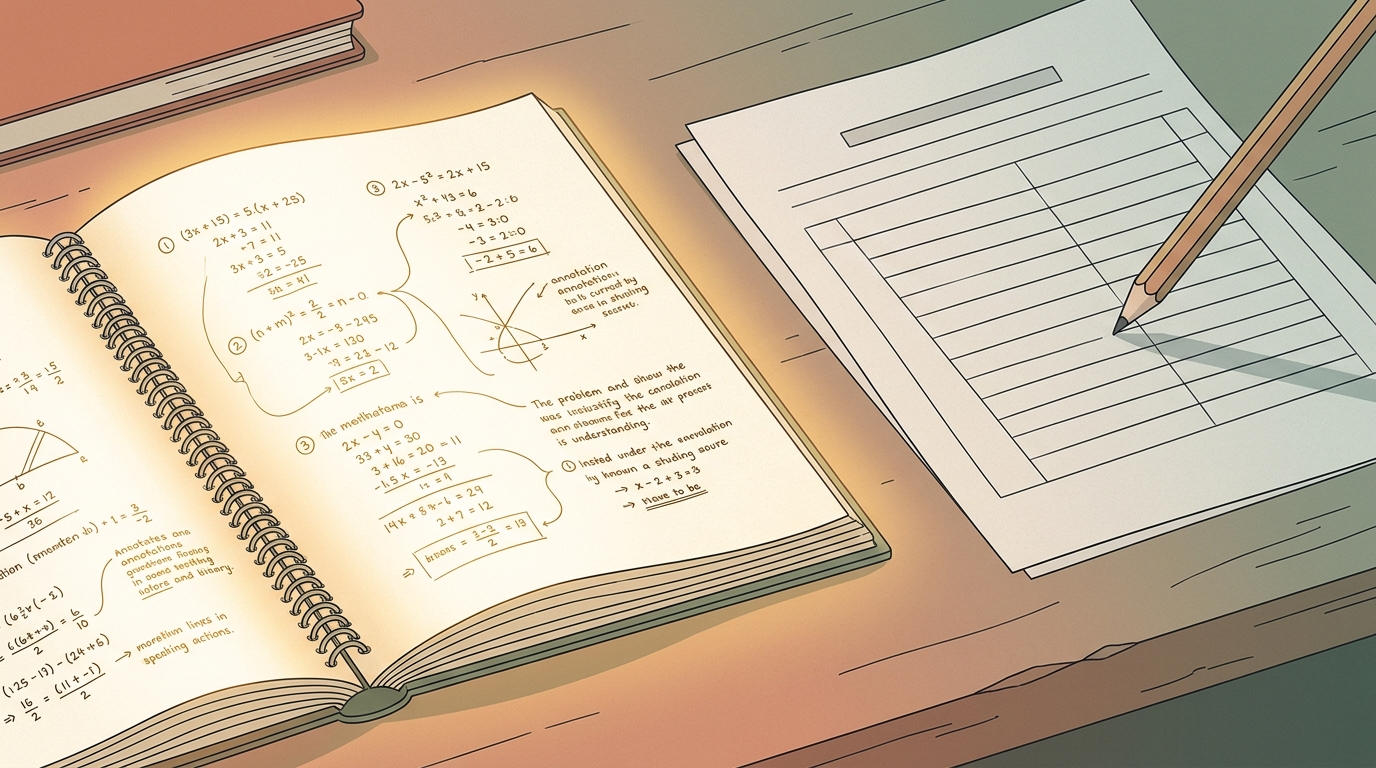
A worked example shows a problem and its solution steps. It can help when a procedure is unfamiliar, but seeing an answer is different from carrying out the task yourself. For a course, certification or workplace procedure, decide what you need to do and choose an example that matches it.
What the evidence covers
Sweller and Cooper studied worked examples in algebra. Kalyuga and colleagues found that prior knowledge mattered in apprentice training. These findings do not make examples the fastest choice for every learner or task. Support that helps with an unfamiliar method can become less useful when you already know it. Familiarity with the page alone does not establish that you can solve the problem.
Move between explanation and attempts
- Choose a reliable example for the skill you need. Check the starting conditions, solution and units where relevant.
- Explain why each step is valid and what conditions it assumes. Ask for clarification when the reasoning is missing.
- Try a related problem without the solution, or a completion problem with some steps supplied. Choose the amount of support you need.
- Compare your attempt with a checked solution. Record the error and choose another example, feedback or independent practice accordingly.
You do not need to wait for perfect understanding before attempting a problem, or abandon examples after a fixed number of minutes. An attempt can show which part needs explanation. A completed familiar problem is also not proof that you can handle a changed condition.
Check the skill beyond the example
If the goal is using a method, include a problem with different values or conditions and explain why the method applies. For a work procedure, practise in an appropriate training setting and use the required checks. Return to difficult parts later when useful; this article does not prescribe a universal review schedule. If Piply drafts an explanation or question, check it against the original material before using it as an answer key.
Put the ideas into practice
Use Piply to organize materials and practise what you’re learning.
Try Piply